Complete One Stop Solution
Free one shot videos, exam-ready notes, and live online classes for every chapter of CBSE Class 12 Psychology — taught by Mr. Nitin Sharma (MA in Psychology, Counselling), teaching board students since 2020.
Whether your board exam is months away or next week, everything you need is on this page: all 7 chapters explained, one shot videos embedded below, and notes that match exactly what CBSE asks.


CBSE Class 12 Psychology Syllabus 2026 — All 7 Chapters
The CBSE Class 12 Psychology (Code 037) syllabus has 7 chapters based on the rationalized NCERT textbook:
Chapter 1 Variations in Psychological Attributes | Intelligence, aptitude, IQ
Chapter 2 Self and Personality | Personality theories, assessment
Chapter 3 Meeting Life Challenges | Stress and coping
Chapter 4 Psychological Disorders | Abnormality, disorders
Chapter 5 Therapeutic Approaches | Therapies, counselling
Chapter 6 Attitude and Social Cognition | Attitudes, prejudice
Chapter 7 Social Influence and Group Processes | Groups, conformity, leadership
Weightage of all 7 Chapters
1. Variations in Psychological Attributes [13 Marks]
2. Self and Personality | Personality theories, assessment [13 Marks]
3. Meeting Life Challenges | Stress and coping [9 Marks]
4. Psychological Disorders | Abnormality, disorders [12 Marks]
5. Therapeutic Approaches | Therapies, counselling [9 Marks]
6. Attitude and Social Cognition | Attitudes, prejudice [8 Marks]
7. Social Influence and Group Processes | Groups, conformity, leadership [6 Marks]
Total 70 Marks
Note: This is as per the information provided on official CBSE Website
Variations in Psychological Attributes

Topics covered: Individual Differences • Situationism • Assessment, Assessment methods and Psychological Attributes • Intelligence (Definition by Alfred Binet, Wechsler, Oxford) • Psychometric approach VS Information processing approach • Psychometric Approach (Uni factor, Two Factor, theory of primary mental abilities, Hierarchical model, Structure of Intellect model) • Information Processing Approach (Theory of multiple intelligence, Triarchic Theory, PASS model) • Nature VS Nurture influences on Intelligence • Assessment of Intelligence (MA & IQ) • Normal Curve • Intellectual Deficiency (ID or MR) • Intellectual Giftedness • Types of Intelligence tests (Testing in India also) • Culture and Intelligence • Emotional Intelligence (EQ) (Special Abilities also) • Creativity, Creativity and Intelligence.
Self and Personality

Topics covered: Meaning & Definition of Self, Kinds of Self (Personal & Social) • Identity (Personal Identity & Social Identity) • Dual Status of Self (Self as Subject & Self as Object) • Cognitive & Behavioural Aspects of Self (Self Esteem, Self Efficacy & Self Regulation) • Culture & Self (Difference) • Concept of Personality (Definition & 4 Main Features) • Type Approach to Personality (Hippocrates, Charaka Samhita Ayurveda, Sheldon, Carl Jung, Friedman & Rosenman) • Trait Approach to Personality (Gordon Allport, Raymond Cattell, HJ Eysenck) • Psychodynamic approach by Sigmund Freud (Levels of Consciousness, Structure of Personality, Defence Mechanisms, Stages of Personality Development) • Post Freudian Approaches (Carl Jung, Karen Horney, Alfred Adler, Erich Fromm, Erik Erikson) • Behavioural Approach to Personality • Cultural Approach to Personality • Humanistic Approach to Personality • Personality Assessment (Self Report Measure, Projective Techniques, Behavioural Analysis)
Meeting Life Challenges

Topics covered: Stress, its meaning, definition, stressors, strain • 2 types of stress (Eustress & Distress) • General Adaptation Syndrome (GAS model) by Hans Selye • Cognitive theory of stress (Primary & Secondary appraisal) by Lazarus • Types of Stressors/Stress (Physical & environmental, psychological & social stress) • Sources of Stress • Effects of Stress • Stress & Health (Burnout) | Stress & Lifestyle • Psychoneuroimmunology (Stress and Immune System) • Coping with Stress (Endler & Parker) (Lazarus & Folkman) • Stress Management Techniques • Promoting positive health & Wellbeing • Stress Resistant Personality by Kobasa (Hardiness - 3 Cs) • Life Skills (Assertiveness to Social Support)
Psychological Disorders

Topics covered: Abnormal behaviour • 2 Approaches — Deviation from social norms approach & Maladaptive Approach • 4 Ds (Features/Characteristics) • Historical background & Timeline • Classification of Psychological Disorders (DSM-5 & ICD-10/11) • Factors underlying Abnormal Behaviour • Anxiety Disorder (GAD, Panic disorder, SAD, 3 types of Phobia) • Obsessive Compulsive Disorder (OCD) • Post Traumatic Stress Disorder (PTSD) • Feeding/Eating disorders • Somatic symptoms and related disorders • Dissociative Disorders • Major Depressive Disorder (factors also) • Bipolar 1 Disorder • Substance related & addictive disorders • Disruptive, Impulse control and conduct disorders • Schizophrenia (positive, negative & psycho-motor symptoms) • Neuro Developmental Disorders (ADHD, Autism, Intellectual disability, Specific learning disorder)
Therapeutic Approaches

Topics covered: Psychotherapy meaning and definition • Characteristics of Psychotherapy • Therapeutic relationship (2 components & 5 properties) • Factors Contributing to Healing in Psychotherapy • Ethics in Psychotherapy • Behaviour Therapy/Behavioural Therapy & All Techniques • Cognitive Therapy intro and RET by Albert Ellis • Aaron Beck's Cognitive Therapy • CBT Cognitive Behaviour Therapy • Humanistic & Existential Therapy intro • Client Centred Therapy by Carl Rogers • Gestalt Therapy by Perls • Logo Therapy by Victor Frankl • Alternative Therapies (Yoga and Meditation) • Rehabilitation of Mentally Ill
Attitude and Social Cognition

Topics covered: Attitude (Meaning and Definition) • The A-B-C Components • Attitude Formation (Learning through association, reward & punishment, observing others, group or cultural norms, information exposure) • Attitude Change (Concept of Balance, Concept of Cognitive Dissonance & 2 Steps Concept) • Attitude-Behavior relationship • Prejudice and Discrimination (Meaning & Sources) • Strategies for Handling Prejudice
Social Influence and Group Processes

Topics covered: Collection of People (Group, Team, Crowd, Audience & Mob) • Nature and Formation of Groups (Why people join?, Tuckman Theory, Group think, etc) • Type of Groups • Influence of Group on Individual Behaviour • Social Loafing • Group Polarisation
Frequently Asked Questions (FAQs)
Which is the best YouTube channel for CBSE Class 12 Psychology?
Are one shot videos enough for Class 12 Psychology boards?
How many chapters are there in CBSE Class 12 Psychology?
Is Class 12 Psychology easy to score in?
Does Psych Shots provide notes for Class 12 Psychology?
Can I join live online classes for Class 12 Psychology?

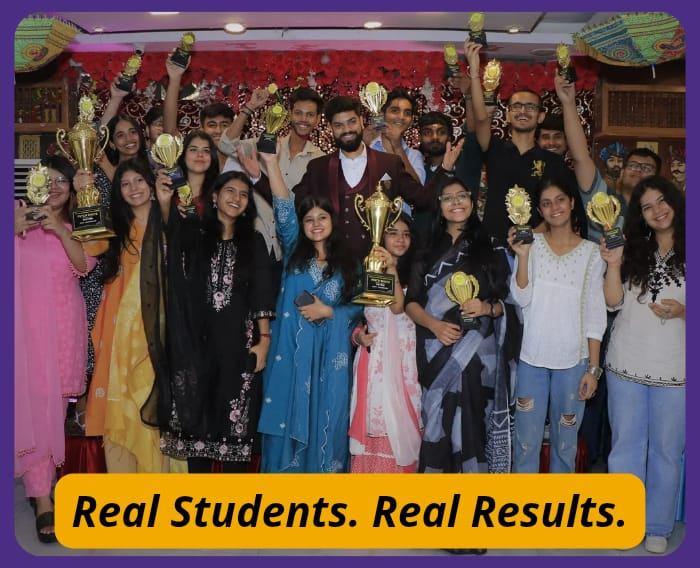
- Results don't lie — In our 2025-26 live batch, 18 students scored a perfect 100 in Psychology, 73 out of 109 students scored 90 or above, and 98 out of 109 scored 80+. That's 90% of our batch scoring 80 or above in CBSE boards. Everyone promises results. We prove them.
- Taught by a qualified educator — Mr. Nitin Sharma holds an MA in Psychology (Counselling specialization) and has taught CBSE Psychology on YouTube and Unacademy since 2020.
- One shots, not 10-part series — each chapter covered completely in a single, efficient video. That's why it's called Psych Shots.
- Exactly mapped to CBSE — latest rationalized NCERT syllabus, marking scheme, and previous year question patterns.
- Students across India and abroad — including CBSE students in Dubai and other international schools.
- A complete ladder — start free on YouTube, add notes for ₹299, join the full-year live batch or crash course when you want personal teaching.