Complete One Stop Solution
New to Psychology? Don't worry — this is your one-stop solution.
If you've just chosen Psychology in Class 11, you've picked one of the most fascinating subjects in CBSE. This page gives you everything: all 8 chapters explained in free one shot videos, exam-ready notes, and a live crash course batch (starts: october every year) — taught by Mr. Nitin Sharma (MA in Psychology, Counselling), teaching CBSE board students since 2020.


What Will You Study in Class 11 Psychology?
Class 11 Psychology builds your foundation. You'll learn what psychology actually is (hint: it's a science, not just "reading minds"), how psychologists conduct research, how humans develop, learn, remember, think, and what drives our motivation and emotions.
It's the base for everything in Class 12 — disorders, therapy, personality — so building strong fundamentals now makes next year much easier. And remember: Psychology is not just another subject. It's the one subject you'll use on yourself every single day.
CBSE Class 11 Psychology Syllabus 2026 — All 8 Chapters
The rationalized NCERT Class 11 Psychology textbook has 8 chapters:
Chapter 1 What is Psychology? / Understanding Psychology | Nature, Evolution, branches, careers
Chapter 2 Methods of Enquiry in Psychology | Research methods, ethics
Chapter 3 Human Development | Life-span development
Chapter 4 Sensory, Attentional and Perceptual Processes | Sensation, attention, perception
Chapter 5 Learning | Conditioning, learning theories
Chapter 6 Human Memory | Memory models, forgetting
Chapter 7 Thinking | Problem solving, reasoning, language
Chapter 8 Motivation and Emotion | Needs, Maslow, emotions
Weightage of all 8 Chapters
1. What is Psychology?/Understanding Psychology [11 Marks]
2. Methods of Enquiry in Psychology [13 Marks]
3. Human Development [11 Marks]
4. Sensory, Attentional and Perceptual Processes [8 Marks]
5. Learning [9 Marks]
6. Human Memory [8 Marks]
7. Thinking [5 Marks]
8. Motivation and Emotion [5 Marks]
Total 70 Marks
Note: This is as per the information provided on official CBSE Website
What is Psychology?

Topics covered: Introduction: What is Psychology? • Definition (Study of mental processes, experience & behaviour) • Psychology as a Discipline • Psychology as a Natural Science • Psychology as a Social Science • Understanding Mind and Behaviour • Popular Notions about Psychology • Evolution of Psychology • Branches of Psychology • Psychology and Other Disciplines • Psychology in Everyday Life
Methods of Enquiry in Psychology

Topics covered: Goals of Psychological Enquiry • Steps in Conducting Scientific Research • Alternative Paradigms of Research • Nature of Psychological Data • Observation Method • Experimental Method (Variable meaning and types IV, DV) • Correlational method (Positive, Negative and Neutral) • Survey Method • Psychological Testing • Types of tests • Case Study • Analysis of Data • Limitations of Psychological Enquiry • Ethical Issues
Human Development

Topics covered: Meaning of Development (Definition) • Interplay of Biological, Cognitive & Socio-emotional Processes • LifeSpan Perspective on Human Development (7 assumptions) • Important Terms (Growth, Development, Maturation & Evolution) • Factors Influencing Development • Context of Development (Urie Bronfenbrenner & Durganand Sinha's model) • Developmental Stages intro (developmental tasks) • Prenatal Stage (Conception to Birth) • Infancy (all aspects, motor development, sensory, cognitive, etc) • Jean Piaget's theory (important base) • Socio Emotional Development in Infancy • Childhood (Motor, Cognitive, Moral development, etc) • Challenges of Adolescence (Physical, Cognitive development, major concerns etc) • Adulthood and Old Age
Sensory, Attentional and Perceptual Processes

Topics covered: Sensation Meaning & Definition (sense modality) • Functional Limitation of Sense organs (Absolute Threshold and Difference Threshold with practical example) • Attention Meaning & Types (Selective and Sustained Meaning & Definition of both) • Divided Attention (meaning and definition) • Factors affecting Selective attention (External, Internal, Cognitive) • Factors affecting Sustained attention (Sensory Modality, Clarity of Stimuli, Temporal Uncertainty, Spatial Uncertainty) • Theories of Selective Attention (Filter, Filter Attenuation, Multimode theory of attention) • Perception Meaning & Definition (Bottom up and Top down approach) • Factors affecting Perception / The Perceiver (Motivation, expectations, Cognitive styles, Culture & experience) • Principles of perceptual organization (Gestalt 7 psychology principles) • Perception of Space, Depth and Distance (All Monocular & Binocular cues & Perceptual Constancies — Shape, Size, Brightness) • Illusions (Personal, Geometrical & Apparent movement illusion) • Socio-Cultural Influences on Perception
Learning

Topics covered: Learning Meaning, Introduction & Definition with practical examples • Features of Learning • Classical Conditioning (Dog Experiment by Ivan Pavlov) • Determinants of Classical Conditioning • Operant Conditioning (Rat Experiment by BF Skinner) • Determinants of Operant Conditioning • Key Learning Processes • Difference Between Classical and Operant Conditioning • Observational Learning (Bobo Doll Experiment by Albert Bandura) • Cognitive Learning (Kohler's Insight Learning (chimpanzee) & Tolman's Latent Learning (Rats)) • Verbal Learning (Paired-Associate Learning, Serial Learning, Free Recall & Determinants) • Skill Learning (Fitts' 3 stages) • Factors Facilitating Learning • Learning Disability & all symptoms
Human Memory

Topics covered: Memory, meaning and definition (encoding, storage, retrieval) • The Stage Model of Memory by Atkinson and Shiffrin (Sensory, Short Term and Long Term) • Control Processes (all four) • Levels of Processing model of memory by Craik and Lockhart • Types of Long Term Memory (Declarative, Procedural, Episodic & Semantic) • Forgetting (Nature, Meaning, Hermann Ebbinghaus curve of forgetting) • Causes of Forgetting (Encoding Failure, Trace Decay, Interference, Retrieval Failure) • Enhancing Memory (Mnemonics used to improve memory)
Thinking

Topics covered: Nature of Thinking (Definition and characteristics) • Building blocks of thought (Mental Images, Concepts) • Problem Solving (Nature, Obstacles — Mental set, Functional fixedness, Lack of motivation) • Reasoning (Deductive and Inductive) • Decision Making • Nature and Process of Creative Thinking • Divergent vs. Convergent Thinking • Aspects of Creative Thinking (Fluency, Flexibility, Originality, Elaboration) • Stages of Creative Thinking (Preparation, Incubation, Illumination, Verification) • Barriers to Creative Thinking (Habitual/Mental set, Perceptual, Emotional, Cultural/Social) • Strategies for Creative Thinking (Brainstorming, Developing problem-solving orientation, Encouraging diverse perspectives) • Thought and Language (Language as a vehicle of thought, Determinism vs. Relativism — Linguistic Relativity Hypothesis) • Development of Language (Stages — Babbling, One-word, Two-word, Telegraphic speech; Theories — Behaviorist vs. Nativist/Chomsky view)
Motivation and Emotion

Topics covered: Definition of motivation and emotion • Interdependence of motivational and emotional states • The Motivational Cycle (Need → Drive → Arousal → Goal-Directed Behavior → Goal Attainment → Reduction of Arousal) • Biological Motives (Hunger, Thirst, Sex) • Psychosocial Motives (Affiliation, Need for Achievement (n-Ach), Power motive, Curiosity and Exploration) • Maslow's Hierarchy of Needs (Physiological, Safety, Belongingness and Love, Esteem, Self-Actualization) • Nature and Expression of Emotions (Physiological, cognitive, and behavioral components) • Cultural Influence (Universal vs. display rules in emotional expression and labeling) • Emotional Regulation (Techniques for managing negative emotions and cultivating positive states)
Frequently Asked Questions (FAQs)
Which is the best YouTube channel for CBSE Class 11 Psychology?
Is Class 11 Psychology hard?
How many chapters are there in CBSE Class 11 Psychology?
Should I take Psychology in Class 11?
Does Psych Shots provide notes for Class 11?
What can I do after studying Psychology?

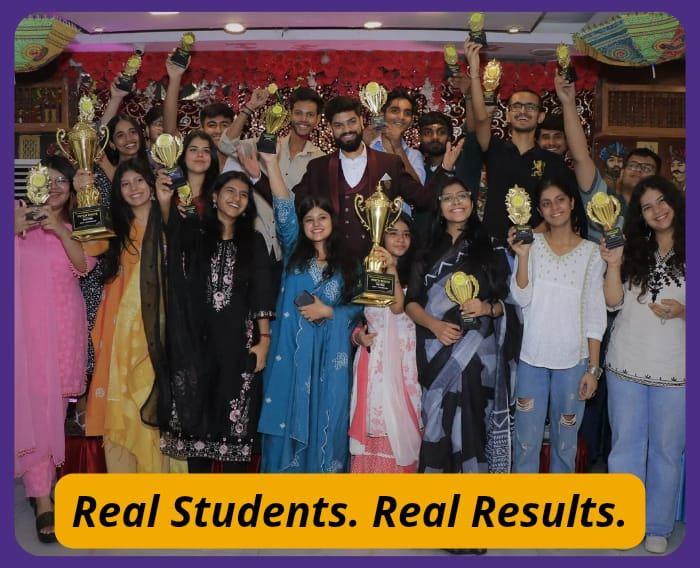
- Results don't lie — In our 2025-26 live batch for class 12th, 18 students scored a perfect 100 in Psychology, 73 out of 109 students scored 90 or above, and 98 out of 109 scored 80+. That's 90% of our batch scoring 80 or above in CBSE boards. Everyone promises results. We prove them.
- Taught by a qualified educator — Mr. Nitin Sharma, MA in Psychology (Counselling specialization), teaching CBSE Psychology since 2020.
- One shots, not endless playlists — every chapter completed in one efficient video.
- NCERT-mapped — latest rationalized syllabus, exactly what CBSE asks.
- Affordable for everyone — free videos, ₹299 notes, structured courses. Something for everyone.
- Students across India and abroad, including international CBSE schools.